Understanding the differences between brown adipose tissue and white fat is crucial in the fight against obesity and related diseases like diabetes. While most people know that having too much body fat is unhealthy, fewer understand the distinct roles that different types of fat play in our bodies.
Fat cells are not just storage units for energy; they actively influence our metabolism and overall health. The distinction between brown and white fat is significant, with each type having different functions and impacts on our well-being.
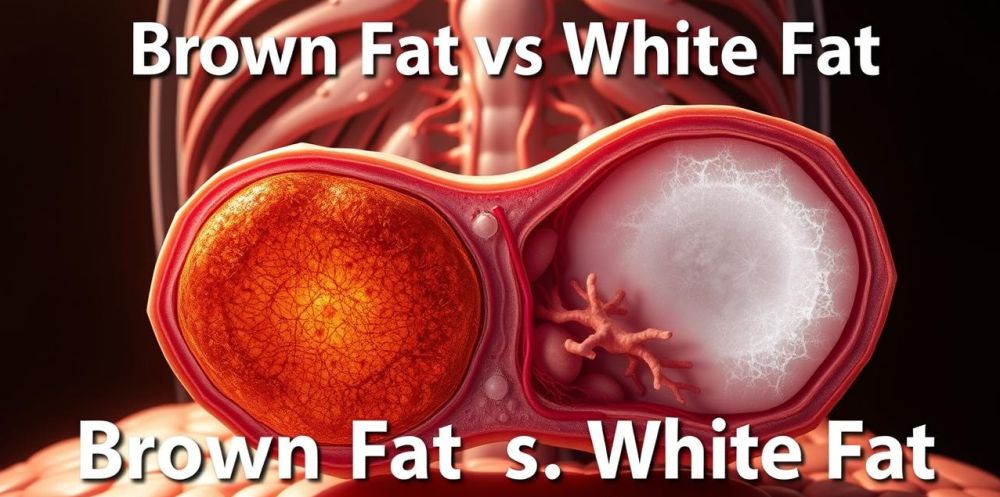
As we explore the world of body fat, it becomes clear that knowing the difference between these two types can be a key factor in managing weight and improving health outcomes.
Key Takeaways
- Understanding the difference between brown and white fat is crucial for managing obesity.
- Brown adipose tissue plays a significant role in metabolism.
- Fat cells influence overall health beyond just storing energy.
- The distinction between brown and white fat can impact weight management.
- Knowing the roles of different fat types can improve health outcomes.
The Science Behind Body Fat
Adipose tissue is not just a storage of energy; it’s a complex organ that influences our metabolism and health. To understand its role, we need to delve into what adipose tissue is, why our bodies need it, and how its distribution affects our health.
What Is Adipose Tissue?
Adipose tissue, or body fat, is a type of loose connective tissue made up of adipocytes. Its primary function is to store energy in the form of fat. However, it’s more than just a passive storage; it actively regulates energy metabolism and releases hormones that influence our body’s metabolic state.
Why Our Bodies Need Fat
Our bodies need fat for several critical functions. It serves as an energy reserve, provides insulation, and protects our organs. Moreover, fat is involved in the regulation of hormones and inflammation, playing a crucial role in our overall health and well-being.
Fat Distribution and Health
The way fat is distributed in our body significantly impacts our health. Visceral fat, which accumulates around our organs, is associated with higher risks of health problems, including heart disease and insulin resistance. On the other hand, subcutaneous fat, found just beneath the skin, is generally considered less harmful.
| Fat Distribution Type | Location | Health Risks |
|---|---|---|
| Visceral Fat | Around organs | Heart disease, insulin resistance |
| Subcutaneous Fat | Under the skin | Generally less harmful |
Brown Fat vs White Fat: Understanding the Differences
The distinction between brown fat and white fat lies in their cellular structure, function, and distribution in the body. Understanding these differences is crucial for appreciating their roles in our overall health and metabolism.
Cellular Structure and Appearance
Brown adipose tissue is characterized by its dense mitochondrial content, which gives it a brown color and enables it to burn calories. In contrast, white adipose tissue has fewer mitochondria and is primarily involved in energy storage. The multilocular structure of brown fat cells allows for greater heat production compared to the unilocular structure of white fat cells.
Evolutionary Purpose
The evolutionary purpose of brown fat is to generate heat, particularly in infants and during cold exposure in adults. White fat, on the other hand, serves as an energy reserve, storing triglycerides that can be mobilized when needed.
Distribution in the Human Body
Brown fat is predominantly found in the neck and upper back regions, whereas white fat is distributed throughout the body, with significant deposits often found subcutaneously and viscerally.
| Characteristics | Brown Fat | White Fat |
|---|---|---|
| Primary Function | Heat Generation | Energy Storage |
| Mitochondrial Content | High | Low |
| Cellular Structure | Multilocular | Unilocular |
| Typical Locations | Neck, Upper Back | Subcutaneous, Visceral |
Brown Adipose Tissue: The Calorie-Burning Fat
The human body contains a special type of fat called brown adipose tissue, which plays a crucial role in thermogenesis. Unlike white fat, which stores energy, brown fat burns calories to produce heat.
Unique Properties of Brown Fat Cells
Brown adipose tissue is highly metabolically active due to its rich content of mitochondria, the cell’s powerhouses. This high mitochondrial density gives brown fat its characteristic color and enables it to burn fatty acids and glucose to produce heat.
Mitochondrial Density: The high density of mitochondria in brown fat cells allows for efficient energy expenditure.
The Role of Mitochondria and UCP1
Mitochondria in brown fat cells contain a unique protein called Uncoupling Protein 1 (UCP1). UCP1 is responsible for the thermogenic function of brown fat by uncoupling mitochondrial ATP production from the respiratory chain, thereby generating heat.
- UCP1 activation leads to increased thermogenesis.
- Mitochondrial biogenesis is enhanced in brown fat, contributing to its calorie-burning capacity.
Brown Fat in Newborns vs. Adults
Brown adipose tissue is highly prevalent in newborns, playing a critical role in maintaining their body temperature. In adults, the amount of brown fat is significantly less, but it can still be activated under certain conditions, such as cold exposure.
| Characteristics | Newborns | Adults |
|---|---|---|
| Amount of Brown Fat | High | Low |
| Activation | Naturally active | Can be activated by cold exposure |
| Function | Thermogenesis | Thermogenesis, glucose metabolism |
In conclusion, brown adipose tissue is a unique and metabolically active form of fat that plays a significant role in calorie burning and thermogenesis. Understanding its properties and functions can provide insights into potential therapeutic strategies for obesity and metabolic disorders.
White Adipose Tissue: Energy Storage and Beyond
White adipose tissue is the most abundant type of fat in adults, serving as an energy reservoir and performing other vital roles. It is crucial for understanding how our bodies manage energy storage and expenditure.
How White Fat Stores Energy
White adipose tissue stores energy in the form of triglycerides within its cells. When we consume more calories than we expend, the excess energy is converted into triglycerides and stored in white fat cells. This stored energy can be mobilized when the body needs it, making white fat a critical component of our energy balance.
Subcutaneous vs. Visceral White Fat
White adipose tissue can be categorized into two main types based on its location: subcutaneous and visceral. Subcutaneous fat is found under the skin and is generally considered less harmful. In contrast, visceral fat accumulates around the organs and is associated with a higher risk of metabolic disorders.
The distribution of white fat varies among individuals and can be influenced by genetics, lifestyle, and hormonal factors. Understanding the differences between these two types of white fat is essential for addressing obesity-related health issues.
Hormonal Functions of White Fat
White adipose tissue is not just a passive energy storage depot; it actively secretes hormones that influence metabolism and energy balance. One of the key hormones produced by white fat is leptin, which plays a crucial role in regulating appetite and energy expenditure. Leptin signals the brain about the body’s energy status, helping to maintain a balance between energy intake and expenditure.
The hormonal functions of white fat highlight its importance in overall metabolic health. Dysregulation in the secretion of these hormones can contribute to various metabolic disorders, including obesity and diabetes.
The Emerging Role of Beige Fat
Beige fat, a relatively new discovery in the realm of adipose tissue, is gaining attention for its unique properties. This type of fat is not entirely new; however, its significance and potential benefits are just beginning to be understood.
What Is Beige Fat?
Beige fat is a type of adipose tissue that shares characteristics with both white and brown fat. Unlike white fat, which primarily stores energy, beige fat is involved in thermogenesis, the process of heat production in organisms. Beige fat cells are scattered within white fat depots and can be induced under certain conditions, such as cold exposure or exercise.
How White Fat Transforms into Beige Fat
The transformation of white fat into beige fat is a complex process influenced by various factors, including exercise and certain hormones. Research has shown that physical activity can induce the browning of white fat, thereby increasing the amount of beige fat in the body. This process is believed to be mediated by the release of certain myokines during exercise.
The Irisin Connection
Irisin, a hormone released during exercise, has been identified as a key player in the browning of white fat. Studies have shown that irisin can induce the transformation of white adipose tissue into beige fat, enhancing thermogenesis and potentially improving metabolic health. The discovery of irisin’s role in beige fat formation has opened new avenues for research into obesity and metabolic disorders.
In conclusion, beige fat represents a promising area of research with significant implications for our understanding of obesity and metabolic health. Further studies are needed to fully elucidate the mechanisms behind beige fat formation and its potential therapeutic applications.
Health Benefits of Brown Fat
Research has unveiled that brown fat plays a crucial role in enhancing metabolic health and preventing various diseases. The presence of brown adipose tissue is associated with several metabolic advantages, making it a significant factor in overall health.
Metabolic Advantages and Calorie Burning
Brown fat is highly metabolically active, burning calories to produce heat. This process not only helps in managing weight but also improves metabolic health by reducing the risk of obesity-related complications. The unique property of brown fat to burn calories can be a significant advantage in maintaining a healthy weight.
Impact on Obesity Prevention
The role of brown fat in obesity prevention is substantial. By increasing the body’s energy expenditure, brown fat can help prevent obesity. Studies have shown that individuals with more brown fat tend to have a lower body mass index (BMI), highlighting its potential in obesity prevention.
Relationship with Insulin Sensitivity and Diabetes
Brown fat has been linked to improved insulin sensitivity, reducing the risk of developing type 2 diabetes. By enhancing glucose uptake in the body, brown fat plays a protective role against insulin resistance, a precursor to diabetes.
Cardiovascular Health Connections
The presence of brown fat is also associated with improved cardiovascular health. It helps in reducing the levels of bad cholesterol and triglycerides, both of which are risk factors for heart disease. Moreover, brown fat’s role in improving insulin sensitivity further contributes to cardiovascular health.
| Health Benefit | Description |
|---|---|
| Metabolic Advantages | Burns calories, improves metabolic health |
| Obesity Prevention | Increases energy expenditure, helps maintain healthy weight |
| Insulin Sensitivity | Enhances glucose uptake, reduces risk of type 2 diabetes |
| Cardiovascular Health | Reduces bad cholesterol and triglycerides, improves heart health |
Factors That Influence Brown Fat Levels
Brown fat levels are affected by a multitude of factors, ranging from age to lifestyle choices. Understanding these factors is crucial for developing strategies to enhance brown fat activity and potentially improve metabolic health.
Age-Related Changes from Childhood to Adulthood
Brown fat is more prevalent in infants and young children, playing a vital role in their thermogenic capabilities. As individuals age, the amount of brown fat typically decreases. Research suggests that adults have less brown fat compared to children, but it is still present, particularly in the neck and upper back regions. The decline in brown fat with age is associated with changes in metabolic rate and energy expenditure.
Genetic Factors and Individual Variation
Genetics play a significant role in determining brown fat levels. Some individuals may naturally have more brown fat due to their genetic makeup. Studies have identified certain genetic variants associated with higher brown fat activity, suggesting a hereditary component to brown fat distribution. Understanding genetic influences can help in tailoring interventions to boost brown fat in individuals with lower levels.
Environmental and Lifestyle Influences
Environmental factors and lifestyle choices also significantly impact brown fat levels. Exposure to cold temperatures is a well-known stimulator of brown fat activity. Regular exercise and certain dietary components can also influence brown fat levels, offering potential avenues for increasing its activity. Additionally, reducing obesity and improving overall metabolic health can positively affect brown fat levels.
By understanding and manipulating these factors, individuals may be able to enhance their brown fat levels, potentially leading to improved metabolic health and reduced risk of obesity-related diseases.
How to Activate and Increase Brown Fat
To harness the calorie-burning power of brown fat, you need to know how to activate it. Fortunately, several methods can help boost your brown fat levels, and they’re backed by science.
Cold Exposure Techniques and Ice Baths
Cold exposure is one of the most effective ways to activate brown fat. When you’re exposed to cold, your body works harder to maintain its internal temperature, and brown fat plays a key role in this process. Cold showers and ice baths are popular methods for cold exposure. Even a few minutes a day can make a difference.
Exercise Protocols That Boost Brown Fat Activity
Exercise is another powerful tool for activating brown fat. Aerobic exercises, such as running or cycling, are particularly effective. Research suggests that regular exercise can increase brown fat activity and improve overall metabolic health. Incorporating high-intensity interval training (HIIT) into your routine can also be beneficial.
Dietary Approaches and Nutrients
Your diet can also play a role in brown fat activation. Certain nutrients, such as omega-3 fatty acids and curcumin, have been shown to support brown fat activity. Eating a balanced diet rich in fruits, vegetables, and whole grains can help.
Emerging Activation Methods
Researchers are exploring new ways to activate brown fat, including the use of certain compounds and pharmaceuticals. While these methods are still in the early stages, they hold promise for future treatments. Staying informed about the latest research can help you take advantage of new findings.
Latest Research on Brown Fat and Obesity Treatment
Obesity treatment is being revolutionized by the latest breakthroughs in brown fat research. Scientists are increasingly focused on understanding how brown adipose tissue can be harnessed to combat obesity and related metabolic disorders.
Breakthrough Studies and Discoveries
Recent studies have made significant strides in understanding the role of brown fat in energy expenditure. Researchers have discovered that even small amounts of brown fat can have a substantial impact on metabolic health. For instance, a study published in the New England Journal of Medicine found that individuals with higher levels of brown fat had improved glucose metabolism and were less likely to be obese.
Key findings from these studies include the identification of novel pathways that activate brown fat, potentially leading to new therapeutic targets for obesity treatment.
Pharmaceutical Approaches to Brown Fat Activation
Pharmaceutical companies are now exploring drugs that can activate brown fat. These medications aim to mimic the effects of cold exposure or exercise on brown fat activity. For example, researchers are investigating the potential of beta-3 adrenergic receptor agonists to stimulate brown fat thermogenesis.
Brown Fat Transplantation Research
Another promising area of research involves the transplantation of brown fat into obese individuals. Animal studies have shown that transplanting brown fat can improve metabolic health and reduce obesity. While this approach is still in its infancy, it represents a potential future direction for obesity treatment.
Measuring and Testing Your Brown Fat Levels
Currently, measuring brown fat activity typically involves advanced imaging techniques such as PET scans. These methods can be expensive and expose individuals to radiation. Researchers are working on developing more accessible and safer methods to measure brown fat activity, potentially using biomarkers or other non-invasive tests.
In conclusion, the latest research on brown fat is paving the way for innovative approaches to obesity treatment. As our understanding of brown fat continues to grow, we can expect to see new therapies emerging that harness its potential to improve metabolic health.
Conclusion
Understanding the differences between brown fat and white fat is crucial for grasping their roles in our overall health. Brown fat is highly metabolically active, burning calories to produce heat, whereas white fat stores energy. The balance between these two types of fat can significantly impact our metabolic health, influencing our risk of obesity, diabetes, and cardiovascular diseases.
The health implications of having more brown fat are substantial, including improved insulin sensitivity and enhanced metabolic rate. Conversely, excessive white fat, particularly visceral fat, is associated with increased health risks. By understanding these differences, individuals can make informed lifestyle choices to optimize their fat composition.
In summary, the distinction between brown fat and white fat is not just about their appearance; it’s about their function and impact on our health. By promoting the activation and increase of brown fat through cold exposure, exercise, and dietary approaches, individuals can potentially improve their metabolic health and reduce the risk of chronic diseases.
FAQ
What is the main difference between brown fat and white fat?
Brown fat is highly metabolically active and burns calories to generate heat, whereas white fat stores energy in the form of fat droplets.
How does brown fat help with weight loss?
Brown fat burns calories, which can help increase energy expenditure and potentially aid in weight loss, particularly when combined with a healthy diet and regular exercise.
Can adults increase their brown fat levels?
Yes, adults can potentially increase their brown fat levels through cold exposure, exercise, and certain dietary approaches, although individual results may vary.
What is beige fat, and how does it relate to white and brown fat?
Beige fat is a type of fat that is induced in white fat tissue in response to certain stimuli, such as cold exposure or exercise, and it shares some characteristics with brown fat, including increased mitochondrial activity.
How does white fat affect overall health?
Excessive white fat, particularly visceral fat, is associated with various health problems, including insulin resistance, type 2 diabetes, and cardiovascular disease.
Can brown fat help regulate blood sugar levels?
Yes, brown fat has been shown to improve insulin sensitivity and glucose metabolism, which can help regulate blood sugar levels and potentially reduce the risk of developing type 2 diabetes.
What are some ways to activate brown fat?
Techniques to activate brown fat include cold exposure, such as taking ice baths, exercising regularly, and consuming certain nutrients that support brown fat activity.
How does age affect brown fat levels?
Brown fat levels tend to decrease with age, although this can vary from person to person, and some adults may retain or even increase their brown fat levels through lifestyle interventions.
Is it possible to measure brown fat levels?
Yes, researchers use various methods, including PET scans and infrared thermography, to measure brown fat activity and levels, although these methods may not be readily available for individual use.
Can pharmaceutical approaches help activate brown fat?
Researchers are exploring pharmaceutical approaches to activate brown fat, including compounds that mimic the effects of cold exposure or exercise on brown fat activity.