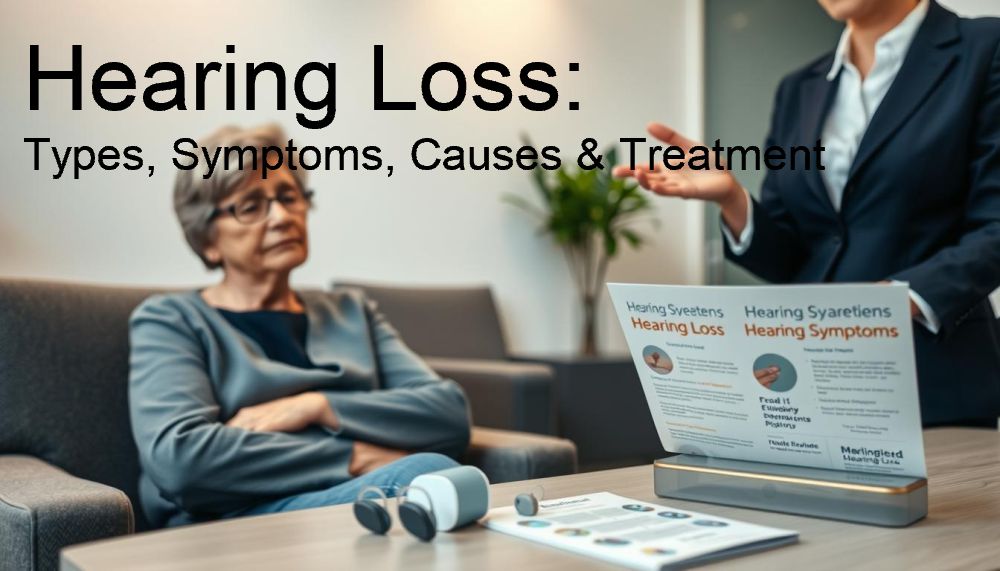
Approximately 1 in 8 people in the United States, around 30 million, experience hearing loss in both ears, according to the CDC. This condition can significantly impact daily life, affecting communication, social interactions, and overall well-being.
Understanding the types, symptoms, causes, and treatment options is crucial for those affected. By recognizing the signs and seeking appropriate care, individuals can improve their quality of life.
Key Takeaways
- Prevalence of hearing loss in the United States
- Impact of hearing loss on daily life
- Importance of understanding types and symptoms
- Causes and risk factors associated with hearing loss
- Available treatment options for hearing loss
Understanding Hearing Loss
Hearing loss is more than just a medical condition; it’s a challenge that affects not only the individual but also their loved ones. It encompasses a range of issues related to the ear’s ability to detect sound.
What Is Hearing Loss?
Hearing loss refers to a reduction in the ability to hear sounds, which can be caused by various factors. It can range from mild to profound and can affect one or both ears. Hearing loss can be temporary or permanent, depending on the underlying cause.
How Common Is Hearing Loss?
Hearing loss is a common condition that affects millions of people worldwide. According to the World Health Organization (WHO), over 430 million people globally have disabling hearing loss. In the United States alone, approximately 37.5 million adults report some trouble hearing.
The Impact of Hearing Loss
The impact of hearing loss extends beyond the individual, affecting family, friends, and society as a whole. It can lead to social isolation, depression, and cognitive decline if left untreated. Moreover, hearing loss can have significant economic implications due to lost productivity and increased healthcare costs.
Understanding the prevalence and impact of hearing loss is crucial for promoting hearing health and improving the quality of life for those affected.
How the Hearing System Works
The ear, a sophisticated sensory organ, plays a vital role in detecting sound waves and maintaining balance. To understand how hearing loss occurs, it’s essential to comprehend the ear’s complex structure and function.
Outer Ear Structure and Function
The outer ear, also known as the pinna or auricle, collects sound waves and directs them into the ear canal. The ear canal’s primary function is to transmit these sound waves to the eardrum, causing it to vibrate.
Middle Ear Components
The middle ear contains three small bones called ossicles: the malleus, incus, and stapes. These bones transmit vibrations from the eardrum to the inner ear. The middle ear’s primary function is to amplify sound vibrations, ensuring efficient sound transmission.
Inner Ear and Sound Processing
The inner ear is responsible for sound processing and balance. It consists of the cochlea, which converts sound vibrations into electrical signals, and the vestibular system, which maintains balance. The cochlea’s spiral shape allows it to detect a wide range of sound frequencies.
The Journey of Sound Waves
Sound waves travel through the ear canal and strike the eardrum, causing it to vibrate. These vibrations are transmitted through the middle ear ossicles to the inner ear, where they are converted into electrical signals. These signals are then transmitted to the brain, where they are interpreted as sound.
Types of Hearing Loss
Hearing loss encompasses a range of conditions, from sensorineural to conductive and mixed hearing loss, as well as auditory processing disorders. Understanding these different types is essential for determining the most effective treatment plan.
Sensorineural Hearing Loss
Sensorineural hearing loss occurs when there is damage to the inner ear or the auditory nerve. This type of hearing loss is often permanent and can be caused by aging, exposure to loud noise, or certain medical conditions. Sensorineural hearing loss can affect an individual’s ability to understand speech, especially in noisy environments.
Conductive Hearing Loss
Conductive hearing loss happens when there’s a problem with the way sound conducts from the outer ear to the inner ear. This can be due to a blockage, a perforated eardrum, or issues with the ossicles. Conductive hearing loss can often be treated with medical or surgical interventions.
Mixed Hearing Loss
Mixed hearing loss is a combination of sensorineural and conductive hearing loss. This means that there is damage to both the outer or middle ear and the inner ear or auditory nerve. Diagnosing mixed hearing loss requires a comprehensive hearing evaluation.
Auditory Processing Disorders
Auditory processing disorders (APD) involve difficulties with processing sound, despite normal hearing sensitivity. Individuals with APD may struggle to understand speech in noisy environments or follow complex instructions. Auditory processing disorders can be managed with auditory training and other therapeutic strategies.
Understanding the specific type of hearing loss is crucial for determining the appropriate treatment. Whether it’s sensorineural, conductive, mixed, or an auditory processing disorder, each condition requires a tailored approach to management and rehabilitation.
Degrees of Hearing Loss
Hearing loss is categorized into various degrees, each with distinct characteristics and challenges. The degree of hearing loss is measured in decibels (dB) and significantly affects an individual’s ability to communicate.
Mild Hearing Loss
Mild hearing loss typically ranges from 26 to 40 dB. Individuals with mild hearing loss may have difficulty hearing soft sounds or following conversations in noisy environments. Speech may sound muffled, and turning up the volume on electronic devices can become a habit.
Moderate Hearing Loss
Moderate hearing loss is characterized by a hearing threshold between 41 and 55 dB. People with moderate hearing loss may struggle to hear normal speech levels and may need to ask others to speak louder or repeat themselves. Watching TV or listening to the radio at a high volume can be common.
Severe Hearing Loss
Severe hearing loss is defined by a hearing threshold between 71 and 90 dB. Those with severe hearing loss have significant difficulty hearing most speech sounds and may rely heavily on lip-reading or other visual cues. Communication can be challenging, and the use of hearing aids or other assistive devices becomes more necessary.
Profound Hearing Loss
Profound hearing loss is the most severe degree, with a hearing threshold above 90 dB. Individuals with profound hearing loss may not be able to hear speech or other sounds, even with amplification. Cochlear implants or other advanced technologies may be considered for treatment.
| Degree of Hearing Loss | Hearing Threshold (dB) | Characteristics |
|---|---|---|
| Mild | 26-40 | Difficulty with soft sounds, noisy environments |
| Moderate | 41-55 | Struggle to hear normal speech, need louder volume |
| Severe | 71-90 | Significant difficulty with speech, rely on lip-reading |
| Profound | >90 | Little to no hearing, even with amplification |
Understanding the degree of hearing loss is crucial for determining the most appropriate treatment and support. By recognizing the characteristics and challenges associated with each level, individuals can better navigate their hearing health.
Common Symptoms of Hearing Loss
Hearing loss can manifest in various ways, and being aware of its symptoms is vital for timely intervention. Recognizing these signs early on can make a significant difference in treatment outcomes, especially for children.
Early Warning Signs
The early warning signs of hearing loss can be subtle, but they are crucial to identify. Some common indicators include:
- Frequently asking others to repeat themselves
- Turning up the volume on electronic devices
- Difficulty understanding speech in noisy environments
- Ringing or other sounds in the ears (tinnitus)
Social and Emotional Indicators
Hearing loss can also have social and emotional implications. People experiencing hearing loss might:
- Feel isolated or withdrawn in social situations
- Avoid conversations or gatherings due to difficulty hearing
- Experience frustration or anxiety related to their hearing
These emotional and social changes can be just as telling as the physical symptoms.
When to Seek Medical Attention
If you or someone you know is experiencing any of the following, it’s time to seek medical attention:
- Sudden hearing loss in one or both ears
- Persistent ringing or other sounds in the ears
- Difficulty hearing that interferes with daily life
Symptoms in Children vs. Adults
Hearing loss in children can manifest differently than in adults. While adults might complain of hearing difficulties, children might:
| Symptoms in Children | Symptoms in Adults |
|---|---|
| Not responding to their name being called | Difficulty understanding speech, especially in noisy environments |
| Delayed speech development | Turning up the TV or radio volume to high levels |
| Watching TV or listening to music at very high volumes | Feeling tired or strained from concentrating on conversations |
Early detection of hearing loss is critical, particularly in children, as it can significantly impact their development and educational progress. If you suspect hearing loss, consulting a healthcare professional is the first step towards diagnosis and treatment.
Causes of Hearing Loss
The etiology of hearing loss encompasses a broad range of factors, from environmental exposures to genetic predispositions. Understanding these causes is essential for both prevention and treatment.
Age-Related Hearing Loss (Presbycusis)
Age-related hearing loss, or presbycusis, is one of the most common causes of hearing impairment, affecting a significant portion of the elderly population. It is characterized by a gradual decline in hearing ability, often affecting the ability to hear high-frequency sounds. Early detection can help individuals adapt and potentially slow the progression.
Noise-Induced Hearing Loss
Noise-induced hearing loss (NIHL) is another prevalent cause, resulting from prolonged exposure to high levels of noise. This can occur in occupational settings or through recreational activities. Protective measures, such as earplugs, can significantly reduce the risk of NIHL.
Medical Conditions and Diseases
Certain medical conditions and diseases can also lead to hearing loss. These include infections like meningitis, otosclerosis, and Meniere’s disease. Prompt medical attention can sometimes mitigate the impact of these conditions on hearing. For instance, treating infections early can prevent complications that lead to hearing loss.
Medications and Ototoxicity
Some medications are ototoxic, meaning they can cause or exacerbate hearing loss. Awareness of these potential side effects is crucial for individuals taking such medications. Monitoring hearing while on ototoxic medications can help in early detection of any adverse effects.
Genetic Factors
Genetic factors play a significant role in hearing loss, with some forms of hearing impairment being hereditary. Genetic testing can help identify individuals at risk, allowing for early intervention.
In conclusion, hearing loss is a multifaceted condition with various causes. Understanding these causes is key to developing effective prevention and treatment strategies.
Sudden Sensorineural Hearing Loss
Sudden sensorineural hearing loss occurs when there’s an immediate, significant loss of hearing, often without warning. This condition is considered a medical emergency and requires prompt attention.
Recognizing the Emergency
The signs of sudden sensorineural hearing loss can be alarming and include a sudden decrease in hearing, often in one ear, and sometimes accompanied by tinnitus or dizziness. Immediate action is crucial to potentially restore hearing.
Potential Causes
The exact cause of sudden sensorineural hearing loss is often difficult to determine, but potential factors include viral infections, vascular disorders, and autoimmune diseases. Understanding these causes can help in diagnosing and treating the condition effectively.
Treatment Timeline and Options
Treatment for sudden sensorineural hearing loss should be initiated as soon as possible, ideally within 72 hours of onset. Common treatment options include corticosteroids to reduce inflammation and improve hearing. The sooner the treatment starts, the better the chances of recovery.
Recovery Expectations
Recovery from sudden sensorineural hearing loss varies among individuals. Some people may experience a full recovery, while others may have permanent hearing loss. Factors influencing recovery include the promptness of treatment and the underlying cause of the condition.
- Seek immediate medical help if you experience sudden hearing loss.
- Understand that timely treatment can significantly impact recovery.
- Be aware of the potential causes and the importance of early diagnosis.
Diagnosing Hearing Loss
The process of diagnosing hearing loss involves several key steps. Accurate diagnosis is crucial for determining the appropriate treatment plan. An audiologist or hearing specialist will guide you through this process.
Initial Evaluation and Medical History
The diagnostic process begins with an initial evaluation, where the audiologist will take a detailed medical history. This includes questions about your symptoms, medical conditions, and exposure to noise. Understanding your medical history helps identify potential causes of hearing loss.
Types of Hearing Tests
Several types of hearing tests are used to diagnose hearing loss. These include:
- Pure-tone audiometry: measures the ability to hear different frequencies
- Speech audiometry: assesses the ability to understand speech
- Tympanometry: evaluates the function of the middle ear
- Auditory brainstem response (ABR) testing: measures the response of the auditory nerve
Understanding Audiograms
An audiogram is a graphical representation of your hearing test results. It shows the degree of hearing loss at different frequencies. Understanding your audiogram helps you and your audiologist make informed decisions about treatment.
Additional Diagnostic Procedures
In some cases, additional diagnostic procedures may be necessary. These can include imaging tests like MRI or CT scans to identify underlying causes of hearing loss. A thorough diagnostic evaluation ensures that you receive the most appropriate treatment.
By following these steps, an audiologist can provide an accurate diagnosis and recommend effective treatment options for hearing loss.
Treatment Options for Hearing Loss
The landscape of hearing loss treatment is diverse, with multiple approaches available to suit different needs. Advances in technology have significantly improved the effectiveness of various treatments, offering new hope to individuals affected by hearing loss.
Hearing Aids: Types and Technology
Hearing aids are among the most common treatment options for hearing loss. They come in various styles, including behind-the-ear (BTE), in-the-ear (ITE), and completely-in-canal (CIC) models. Modern hearing aids incorporate advanced technologies such as digital signal processing, noise reduction, and wireless connectivity to improve sound quality and user experience. Digital hearing aids can be programmed to address specific types of hearing loss, enhancing their effectiveness.
Cochlear Implants
Cochlear implants are a viable option for individuals with severe to profound sensorineural hearing loss who derive little benefit from traditional hearing aids. These devices bypass damaged portions of the ear and directly stimulate the auditory nerve, providing a sense of sound. The decision to opt for a cochlear implant involves a thorough evaluation by an audiologist or an ear, nose, and throat (ENT) specialist.
Bone-Anchored Hearing Systems
Bone-anchored hearing systems (BAHS) are another treatment option, particularly for individuals with conductive hearing loss or single-sided deafness. BAHS work by transmitting sound vibrations through the skull directly to the inner ear, bypassing the outer or middle ear. This can be achieved through a surgically implanted device or a non-surgical option.
Assistive Listening Devices
In addition to hearing aids and implants, assistive listening devices (ALDs) can significantly improve communication in specific situations. ALDs include devices such as personal amplifiers, FM systems, and infrared systems, which can be used in public places like theaters, classrooms, or during one-on-one conversations.
Medical and Surgical Interventions
In some cases, medical or surgical interventions may be necessary to address the underlying cause of hearing loss. This can include surgery to repair or remove a tumor, fix a perforated eardrum, or improve middle ear function. Certain medical conditions causing hearing loss may also require specific treatments.
Understanding the range of treatment options available is crucial for individuals with hearing loss to make informed decisions about their care. Consulting with a healthcare professional or an audiologist can help determine the most appropriate treatment based on the type and severity of hearing loss.
Preventing Hearing Loss
The key to preventing hearing loss lies in being aware of the potential causes and taking steps to mitigate them. By adopting a few simple habits and being mindful of one’s environment, individuals can significantly reduce their risk of experiencing hearing loss.
Noise Protection Strategies
One of the most effective ways to prevent hearing loss is by protecting oneself from loud noises. This can be achieved by wearing earplugs or earmuffs in environments with high noise levels, such as construction sites or during loud recreational activities.
Tips for Noise Protection:
- Use earplugs made from materials like foam or silicone.
- Wear earmuffs that cover the entire ear for maximum protection.
- Limit exposure to loud noises by taking regular breaks in quieter environments.
Safe Listening Practices
Safe listening practices are crucial, especially when using personal audio devices. Keeping the volume at a reasonable level and taking breaks can help prevent damage to one’s hearing.
Regular Hearing Check-ups
Regular hearing check-ups are essential for early detection and prevention of hearing loss. Audiologists can identify potential issues before they become significant problems.
Workplace Hearing Conservation
In workplaces with high noise levels, implementing hearing conservation programs is vital. These programs include monitoring noise levels, providing protective equipment, and training employees on the importance of hearing protection.
| Workplace Hearing Conservation Measures | Description | Benefits |
|---|---|---|
| Noise Monitoring | Regular assessment of noise levels in the workplace. | Identifies areas needing hearing protection. |
| Protective Equipment | Provision of earplugs and earmuffs to employees. | Reduces risk of noise-induced hearing loss. |
| Employee Training | Educating employees on the importance of hearing protection. | Increases compliance with hearing conservation policies. |
By implementing these strategies, individuals can significantly reduce their risk of hearing loss and maintain their overall hearing health.
Hearing Loss in Children
Early identification of hearing loss in children is crucial for implementing appropriate interventions that support their development. Hearing loss, whether congenital or acquired, can significantly impact a child’s ability to develop speech and language skills, socialize, and perform academically.
Congenital vs. Acquired Hearing Loss
Congenital hearing loss is present at birth and can be caused by genetic factors, infections during pregnancy, or complications during delivery. Acquired hearing loss, on the other hand, occurs after birth and can result from infections, exposure to loud noise, or head trauma. Understanding the cause of hearing loss is essential for determining the most effective treatment plan.
Early Detection and Intervention
Early detection of hearing loss is critical and can significantly impact the effectiveness of interventions. Universal newborn hearing screening programs have improved the early identification of hearing loss. Intervention strategies may include hearing aids, cochlear implants, speech therapy, and educational support tailored to the child’s needs.
Timely intervention can make a substantial difference in a child’s developmental trajectory. It enables them to develop language skills more effectively and integrate into educational settings with their peers.
Educational Considerations
Children with hearing loss require individualized educational plans that cater to their specific needs. This may involve the use of assistive listening devices, preferential seating in the classroom, and collaboration between educators and speech-language pathologists to support their learning.
- Assessment of the child’s hearing and communication needs
- Development of an Individualized Education Program (IEP)
- Use of assistive technology to support learning
- Ongoing support and adjustments as needed
Supporting Children with Hearing Loss
Supporting children with hearing loss involves not only medical and educational interventions but also emotional and social support. Families play a crucial role in advocating for their child’s needs and ensuring they have the resources necessary to thrive.
By understanding the complexities of hearing loss in children and the importance of early detection and intervention, we can better support these children in reaching their full potential.
Living with Hearing Loss
Adapting to hearing loss requires a multifaceted approach that includes communication strategies, environmental adjustments, and leveraging technology. By understanding and implementing these adaptations, individuals can lead more fulfilling lives despite their hearing impairment.
Effective Communication Strategies
One of the most significant challenges of living with hearing loss is communication. Effective communication strategies can greatly improve interactions with others. This includes facing the person speaking, asking for clarification when needed, and using visual cues like lip-reading. Additionally, being in a quiet environment can help reduce background noise, making it easier to focus on the conversation.
It’s also beneficial to inform others about your hearing loss and suggest ways they can help, such as speaking clearly and not covering their mouth. Using assistive listening devices in certain situations, like in meetings or classrooms, can further enhance comprehension.
Adapting Your Environment
Making adjustments to your living and working environment can significantly impact your ability to cope with hearing loss. This can involve simple changes like reducing background noise by turning off unnecessary appliances or using sound-absorbing materials to minimize echo.
For those with severe hearing loss, visual alerts can be particularly helpful. These include flashing doorbells, alarm clocks, and smoke detectors, which can be crucial for safety and daily routines.
Technology and Accessibility Tools
Technology plays a vital role in assisting individuals with hearing loss. Hearing aids and cochlear implants are among the most common devices used to improve hearing. Additionally, smartphone apps can help with sound amplification, speech-to-text functionality, and alerting the user to important sounds.
Other accessibility tools include captioning services for television and movies, and vibrating or flashing alert systems for important notifications. Embracing these technologies can greatly enhance the quality of life for those with hearing loss.
Building a Support Network
Living with hearing loss can be isolating if not managed properly. Building a support network of family, friends, and support groups can provide emotional support and practical advice. Sharing experiences and strategies with others who face similar challenges can be incredibly beneficial.
Professional support from audiologists, speech therapists, and counselors can also play a crucial role in helping individuals adapt to their condition and improve their overall well-being.
The Psychological Impact of Hearing Loss
Beyond the physical challenges, hearing loss can lead to significant psychological distress. The experience affects not only the individual but also their interactions with family and friends, potentially leading to feelings of isolation.
Depression and Isolation
Hearing loss can contribute to the development of depression and feelings of loneliness. When communication becomes difficult, social interactions may become less frequent, exacerbating feelings of isolation.
A study found that individuals with hearing loss are more likely to experience depression and anxiety.
“Hearing loss is not just about the ears; it’s about the connection to the world around us.”
Cognitive Effects
The cognitive load of struggling to hear can impact memory and concentration. This strain may accelerate cognitive decline in some individuals.
Coping Mechanisms
Effective coping strategies include staying socially engaged, using assistive listening devices, and practicing relaxation techniques. These methods can help mitigate the psychological impact.
Mental Health Resources
Access to mental health resources is crucial. Support groups, counseling, and therapy can provide necessary support for individuals dealing with the psychological effects of hearing loss.
| Coping Strategy | Benefit |
|---|---|
| Social Engagement | Reduces feelings of isolation |
| Assistive Devices | Improves communication |
| Relaxation Techniques | Decreases stress |
Advances in Hearing Loss Research and Treatment
Advances in hearing loss research are transforming the way we approach treatment and management. Ongoing studies and technological innovations are paving the way for more effective solutions.
Regenerative Medicine
Regenerative medicine holds promise for repairing damaged inner ear cells, potentially restoring hearing in individuals with severe hearing loss. Researchers are exploring ways to regenerate hair cells in the cochlea, which are crucial for sound processing.
Gene Therapy Approaches
Gene therapy is being investigated as a potential treatment for genetic forms of hearing loss. By correcting or replacing the faulty gene responsible for hearing loss, scientists hope to prevent or reverse the condition.
Next-Generation Hearing Technologies
Next-generation hearing technologies, including advanced hearing aids and cochlear implants, are being developed to improve sound quality and user experience. These devices are becoming more sophisticated, with features like AI-powered sound processing.
Promising Clinical Trials
Several clinical trials are underway to test new treatments for hearing loss, including medications and stem cell therapies. These trials are crucial for bringing innovative treatments to market.
| Treatment Approach | Description | Potential Benefits |
|---|---|---|
| Regenerative Medicine | Repairing damaged inner ear cells | Restoring hearing in severe cases |
| Gene Therapy | Correcting genetic causes of hearing loss | Preventing or reversing hearing loss |
| Next-Generation Hearing Technologies | Advanced hearing aids and cochlear implants | Improved sound quality and user experience |
The future of hearing loss treatment looks promising, with various research avenues being explored. As these advances continue to unfold, they are likely to significantly impact the lives of individuals affected by hearing loss.
Conclusion: Taking Action for Better Hearing Health
Maintaining good hearing health is crucial for overall well-being. By understanding the types, symptoms, and causes of hearing loss, individuals can take proactive steps towards prevention and treatment.
Taking action for better hearing health involves protecting one’s hearing, seeking timely medical intervention, and adopting healthy listening practices. Regular hearing check-ups and noise protection strategies can significantly reduce the risk of hearing loss.
Early detection and appropriate treatment can greatly improve the quality of life for individuals with hearing loss. By prioritizing hearing health, individuals can maintain strong connections with family and friends, enjoy social activities, and stay engaged in their communities.
By being informed and taking action, individuals can safeguard their hearing health and enjoy better hearing for years to come.
FAQ
What are the main types of hearing loss?
The main types of hearing loss are sensorineural hearing loss, conductive hearing loss, and mixed hearing loss. Sensorineural hearing loss occurs when there is damage to the inner ear or the auditory nerve. Conductive hearing loss happens when there’s a problem with the way sound is conducted to the inner ear. Mixed hearing loss is a combination of both sensorineural and conductive hearing loss.
What is sensorineural hearing loss?
Sensorineural hearing loss is a type of hearing loss that occurs when there is damage to the inner ear or the auditory nerve. This damage can be caused by a variety of factors, including age-related hearing loss, exposure to loud noise, certain medications, and some medical conditions.
How is hearing loss diagnosed?
Hearing loss is diagnosed through a comprehensive hearing evaluation, which includes a medical history, physical examination, and various hearing tests. These tests may include pure-tone audiometry, speech audiometry, and tympanometry, among others.
What are the symptoms of hearing loss?
The symptoms of hearing loss can vary depending on the type and severity of the loss. Common symptoms include difficulty hearing speech, trouble understanding conversations, ringing or other sounds in the ears, and feeling like you’re having to concentrate hard to hear.
Can hearing loss be prevented?
Yes, some types of hearing loss can be prevented. Protecting your ears from loud noise, avoiding certain medications, and getting regular hearing check-ups can help prevent or reduce the risk of hearing loss.
What are the treatment options for hearing loss?
Treatment options for hearing loss depend on the type and severity of the loss. They may include hearing aids, cochlear implants, bone-anchored hearing systems, assistive listening devices, and medical or surgical interventions.
How can I protect my hearing?
You can protect your hearing by avoiding exposure to loud noise, wearing ear protection when working with power tools or in loud environments, and turning down the volume when listening to music.
What is sudden sensorineural hearing loss?
Sudden sensorineural hearing loss is a medical emergency that occurs when there is a sudden loss of hearing, usually in one ear. It requires immediate medical attention to maximize the chances of recovery.
How does age-related hearing loss occur?
Age-related hearing loss, also known as presbycusis, occurs when the hair cells in the inner ear degenerate over time, leading to a gradual loss of hearing.
Can children experience hearing loss?
Yes, children can experience hearing loss, which can be congenital or acquired. Early detection and intervention are critical for their development and educational success.