A neurodegenerative disorder that affects millions worldwide, Alzheimer’s is a complex condition characterized by progressive memory loss and cognitive decline. Understanding its definition, causes, symptoms, and available treatments is crucial for those affected and their caregivers.
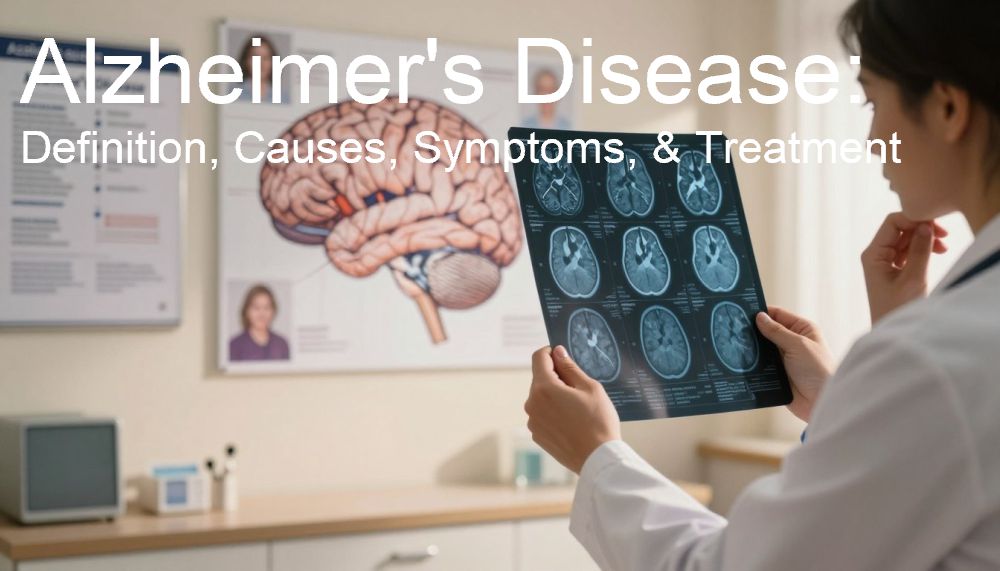
The condition is marked by the accumulation of amyloid plaques and tau tangles in the brain, leading to neuronal damage and disruption of normal brain function. As the dementia progresses, individuals may experience difficulties with daily tasks, communication, and problem-solving.
Key Takeaways
- Alzheimer’s is a neurodegenerative disorder causing progressive memory loss and cognitive decline.
- The condition is characterized by the accumulation of amyloid plaques and tau tangles in the brain.
- Understanding the definition, causes, symptoms, and treatments is crucial for those affected.
- Available treatments aim to manage symptoms and slow disease progression.
- Early diagnosis and intervention can significantly impact the quality of life for individuals with Alzheimer’s.
What is Alzheimer’s Disease?
Understanding Alzheimer’s Disease begins with recognizing its definition and impact. Alzheimer’s Disease is a progressive neurodegenerative disorder that affects memory, thinking, and behavior.
Definition and Classification as a Neurodegenerative Disorder
Alzheimer’s Disease is characterized by the accumulation of amyloid beta plaques and tau tangles in the brain, leading to the loss of brain cells and their function. This classification as a neurodegenerative disorder underscores its irreversible nature and the need for early detection.
Alzheimer’s as the Most Common Cause of Dementia
Alzheimer’s Disease is the most common cause of dementia, accounting for 60-80% of dementia cases. Dementia is a broad term that describes a decline in cognitive function, including memory loss, difficulty with communication, problem-solving, and judgment.
The Impact on Brain Cells and Function
The progression of Alzheimer’s Disease results in the deterioration of brain cells, disrupting the normal functioning of the brain. This impact on brain cells leads to the various cognitive and behavioral symptoms associated with the disease.
The History and Prevalence of Alzheimer’s Disease
Alzheimer’s Disease has a rich history that spans over a century, with its discovery and understanding evolving significantly over the years. The disease was first identified in 1906 by Alois Alzheimer, a German psychiatrist and neuropathologist.
Discovery and Naming of the Disease
Alois Alzheimer’s work led to the identification of the disease that would bear his name. He presented a case study of a 51-year-old woman with significant memory loss and other cognitive symptoms, which upon autopsy, revealed distinctive amyloid plaques and neurofibrillary tangles in her brain.
Current Statistics in the United States
In the United States, Alzheimer’s Disease is a major public health concern. According to recent statistics, over 6 million Americans are living with Alzheimer’s, with this number expected to rise as the population ages.
| Year | Number of Americans with Alzheimer’s |
|---|---|
| 2020 | 6 million |
| 2030 | 7.7 million (projected) |
| 2050 | 13.8 million (projected) |
Global Impact and Future Projections
Globally, Alzheimer’s Disease affects millions, with the World Health Organization estimating that there are approximately 50 million people living with dementia worldwide, a number expected to triple by 2050. Understanding the history and prevalence of Alzheimer’s is crucial for addressing its global impact.
Causes and Risk Factors
Understanding the causes and risk factors of Alzheimer’s Disease is crucial for prevention and management. Alzheimer’s is a complex condition influenced by a multitude of factors.
Genetic Factors and Family History
Genetic factors play a significant role in the development of Alzheimer’s Disease. Individuals with a family history of Alzheimer’s are at a higher risk, particularly if they have a first-degree relative (parent or sibling) with the disease. Certain genetic mutations, such as those affecting the APOE gene, have been associated with an increased risk.
Age-Related Risk
Age is the most significant risk factor for Alzheimer’s Disease. The risk increases exponentially after the age of 65, with the majority of cases being diagnosed in individuals over 70. Age-related changes in the brain, including the accumulation of amyloid plaques and tau tangles, contribute to the development of Alzheimer’s.
Environmental and Lifestyle Influences
Environmental and lifestyle factors also contribute to the risk of developing Alzheimer’s. These include exposure to certain toxins, lack of physical activity, smoking, and poor dietary habits. Engaging in mentally stimulating activities and maintaining social connections may help mitigate some of these risks.
Medical Conditions Associated with Increased Risk
Certain medical conditions are associated with an increased risk of Alzheimer’s Disease. These include cardiovascular disease, diabetes, and obesity. Managing these conditions through lifestyle changes and medical treatment may help reduce the risk.
| Risk Factor | Description | Impact on Risk |
|---|---|---|
| Genetic Factors | Family history and genetic mutations | Increased risk, especially with APOE gene mutations |
| Age | Risk increases after 65 | Exponential increase in risk after 65 |
| Lifestyle Factors | Physical inactivity, smoking, poor diet | Increased risk with unhealthy lifestyle choices |
| Medical Conditions | Cardiovascular disease, diabetes, obesity | Increased risk with unmanaged conditions |
Types of Alzheimer’s Disease
Understanding the different types of Alzheimer’s Disease is crucial for diagnosis and treatment. Alzheimer’s Disease is categorized into several types based on the age of onset and genetic factors.
Early-Onset Alzheimer’s Disease
Early-Onset Alzheimer’s Disease refers to cases that occur in individuals under the age of 65. This form is relatively rare, accounting for about 5-10% of all Alzheimer’s cases. It can be caused by genetic mutations.
Late-Onset Alzheimer’s Disease
The most common form is Late-Onset Alzheimer’s Disease, which typically manifests after the age of 65. Age is the greatest risk factor, and the likelihood increases with advancing age.
Familial Alzheimer’s Disease
Familial Alzheimer’s Disease is a rare, inherited form caused by specific genetic mutations. It tends to develop at a younger age and can be traced through family history.
| Type of Alzheimer’s | Age of Onset | Characteristics |
|---|---|---|
| Early-Onset | Before 65 | Rare, genetic mutations |
| Late-Onset | 65 and older | Most common, age-related |
| Familial | Variable, often younger | Inherited, genetic mutations |
Stages of Alzheimer’s Disease Progression
Understanding the progression of Alzheimer’s Disease is crucial for both patients and caregivers. Alzheimer’s Disease unfolds in several stages, each with distinct characteristics and challenges.
Preclinical Stage
The preclinical stage is the earliest phase of Alzheimer’s, where changes are occurring in the brain but symptoms are not yet apparent. This stage can last for years, even decades, before any noticeable cognitive decline.
Mild Cognitive Impairment (MCI)
Mild Cognitive Impairment (MCI) is a condition that involves problems with memory or other cognitive functions that are greater than normal for a person’s age but not severe enough to interfere significantly with daily life. It is considered a transitional stage between the cognitive decline of normal aging and dementia.
“MCI is a condition that is often a precursor to Alzheimer’s Disease, though not everyone with MCI will develop Alzheimer’s.”
Mild Alzheimer’s Disease
In the mild Alzheimer’s stage, symptoms become more pronounced and can include memory loss, confusion, and difficulty with communication. Individuals may start to experience difficulties with daily tasks, though they can still function independently.
Moderate Alzheimer’s Disease
Moderate Alzheimer’s Disease is characterized by increased cognitive decline and more pronounced memory loss. Individuals may experience confusion, disorientation, and difficulty with speech, making daily tasks challenging without assistance.
Severe Alzheimer’s Disease
The severe stage of Alzheimer’s is the final stage, where individuals lose the ability to respond to their environment, to carry on a conversation, and, eventually, to control movement. Caregivers become the primary support, as patients require around-the-clock care.
It’s essential for patients and caregivers to understand these stages to plan and manage the disease effectively. Early diagnosis and intervention can significantly impact the quality of life for those affected.
Cognitive Symptoms and Signs
Cognitive decline is a hallmark of Alzheimer’s Disease, manifesting in various ways, including memory loss and communication difficulties. As the disease progresses, these symptoms become more pronounced, significantly impacting an individual’s daily life and interactions.
Memory Loss Patterns
One of the most common cognitive symptoms of Alzheimer’s Disease is memory loss. Initially, individuals may struggle to recall recent events or learn new information. As the disease advances, memory loss can become more severe, leading to difficulties in recognizing familiar faces, places, and objects.
- Forgetting recent conversations or events
- Repeating questions or statements
- Misplacing items or forgetting where they were placed
Language and Communication Difficulties
Alzheimer’s Disease can also affect an individual’s ability to communicate effectively. This may involve struggling to find the right words, following or participating in conversations, and understanding written or spoken language.
Common language and communication difficulties include:
- Struggling to find the right words or using incorrect words
- Difficulty understanding or following conversations
- Repeating words or phrases
Disorientation and Confusion
Disorientation and confusion are other significant cognitive symptoms of Alzheimer’s Disease. Individuals may become lost in familiar environments, have difficulty understanding time and date, or struggle to comprehend their surroundings.
Impaired Judgment and Reasoning
As Alzheimer’s Disease progresses, individuals may experience impaired judgment and reasoning. This can lead to difficulties in making sound decisions, managing finances, and performing daily tasks.
Examples of impaired judgment and reasoning include:
- Making impulsive decisions without considering the consequences
- Difficulty managing personal finances or making financial decisions
- Struggling to evaluate risks or understand the need for safety precautions
Understanding these cognitive symptoms and signs is crucial for diagnosing Alzheimer’s Disease and providing appropriate care and support. By recognizing the early warning signs and monitoring the progression of cognitive decline, healthcare professionals and caregivers can develop effective strategies to manage the disease.
Behavioral and Psychological Symptoms
Understanding the behavioral and psychological symptoms of Alzheimer’s Disease is essential for comprehensive care. Alzheimer’s Disease is not just a cognitive disorder; it also encompasses a range of behavioral and psychological symptoms that can significantly impact the quality of life for both patients and caregivers.
Mood Changes and Depression
Mood changes are common in Alzheimer’s patients, with depression being a significant concern. Depression can manifest as persistent sadness, loss of interest in activities, and changes in appetite or sleep patterns. Recognizing these symptoms early is crucial for effective management.
Anxiety and Agitation
Anxiety and agitation are other prevalent symptoms. Patients may become easily agitated, restless, or anxious, often due to confusion or frustration. Creating a calm environment can help mitigate these symptoms.
Personality Changes
Personality changes can also occur, with some individuals becoming more withdrawn or suspicious. Understanding these changes as part of the disease can help caregivers respond with empathy and patience.
Sleep Disturbances and Sundowning
Sleep disturbances, including sundowning (increased agitation in the late afternoon or evening), are common. Establishing a regular sleep schedule and creating a soothing bedtime routine can help manage these disturbances.
Diagnosis of Alzheimer’s Disease
The diagnosis of Alzheimer’s Disease requires a comprehensive approach, incorporating various medical and neurological assessments. This multifaceted process is essential for accurately identifying the disease and distinguishing it from other forms of dementia.
Medical History and Physical Examination
A thorough medical history review and physical examination are the initial steps in diagnosing Alzheimer’s Disease. These assessments help identify potential causes of cognitive decline and rule out other medical conditions that may be contributing to symptoms.
Cognitive and Neuropsychological Tests
Cognitive and neuropsychological tests are used to evaluate memory, language, problem-solving skills, and other cognitive functions. These tests help determine the extent of cognitive impairment and identify patterns consistent with Alzheimer’s Disease.
Brain Imaging Techniques
Brain imaging techniques, such as MRI and PET scans, play a crucial role in diagnosing Alzheimer’s Disease. These imaging modalities help identify characteristic changes in brain structure and function associated with the disease.
Laboratory Tests and Biomarkers
Laboratory tests and biomarkers are used to support the diagnosis of Alzheimer’s Disease. Biomarkers, such as beta-amyloid and tau protein levels in cerebrospinal fluid, can provide valuable information about the presence of Alzheimer’s pathology.
Differential Diagnosis from Other Forms of Dementia
Differential diagnosis is essential to distinguish Alzheimer’s Disease from other forms of dementia, such as vascular dementia, frontotemporal dementia, and Lewy body dementia. A comprehensive diagnostic evaluation helps clinicians accurately diagnose the underlying cause of cognitive decline.
Treatment Approaches and Management
The treatment and management of Alzheimer’s Disease involve a combination of pharmacological and non-pharmacological interventions. Effective management requires a comprehensive approach tailored to the individual’s needs.
FDA-Approved Medications
Currently, there are several FDA-approved medications for Alzheimer’s Disease, including cholinesterase inhibitors and memantine. These medications aim to manage symptoms such as memory loss and cognitive decline.
- Cholinesterase inhibitors (e.g., donepezil, rivastigmine) work by increasing the levels of acetylcholine in the brain.
- Memantine helps by blocking the action of glutamate, a neurotransmitter that can cause damage to nerve cells.
Non-Pharmacological Interventions
Non-pharmacological interventions play a crucial role in managing Alzheimer’s Disease. These include cognitive stimulation, behavioral therapy, and caregiver support.
Cognitive stimulation activities, such as puzzles and memory games, can help maintain cognitive function. Behavioral therapy addresses behavioral symptoms, improving the quality of life for patients and caregivers.
Managing Behavioral Symptoms
Behavioral symptoms in Alzheimer’s Disease, such as agitation and aggression, can be challenging. Managing these symptoms often involves a combination of behavioral interventions and, in some cases, medication.
Lifestyle Modifications
Lifestyle modifications are essential in managing Alzheimer’s Disease. These include regular physical exercise, a balanced diet, and social engagement.
| Lifestyle Modification | Benefits |
|---|---|
| Regular Physical Exercise | Improves cardiovascular health, reduces risk of falls |
| Balanced Diet | Supports overall health, may slow disease progression |
| Social Engagement | Enhances mental health, reduces feelings of loneliness |
Emerging Treatments and Clinical Trials
Research into Alzheimer’s Disease is ongoing, with several emerging treatments and clinical trials showing promise. These include immunotherapies aimed at reducing amyloid plaques in the brain.
As research advances, the hope is that more effective treatments will become available, improving the lives of those affected by Alzheimer’s Disease.
Prevention Strategies and Risk Reduction
While there’s no guaranteed way to prevent Alzheimer’s, research suggests several strategies that may lower the risk. By incorporating these into daily life, individuals can potentially reduce their likelihood of developing Alzheimer’s Disease.
Heart-Healthy Lifestyle Choices
Adopting a heart-healthy lifestyle is crucial. This includes regular physical activity, maintaining a healthy weight, and managing blood pressure. Exercise has been shown to improve cardiovascular health, which in turn may reduce Alzheimer’s risk.
Cognitive Stimulation and Mental Activity
Engaging in cognitively stimulating activities can help build cognitive reserve. This may include reading, puzzles, or learning new skills. Such activities can contribute to a lower risk of cognitive decline.
Social Engagement and Connection
Maintaining social connections and engaging in community activities can support mental health and potentially reduce Alzheimer’s risk. Social engagement is vital for emotional well-being.
Nutritional Approaches
A balanced diet rich in fruits, vegetables, and omega-3 fatty acids supports overall health. Nutritional approaches, such as the Mediterranean diet, have been associated with a reduced risk of Alzheimer’s.
Living with Alzheimer’s: Support and Resources
Living with Alzheimer’s disease requires a comprehensive approach that includes medical treatment, support, and resources for both the diagnosed individual and their caregivers. This multifaceted condition affects not just the patient but the entire family, making a robust support system crucial.
Support for People Diagnosed with Alzheimer’s
Upon diagnosis, individuals with Alzheimer’s and their families need access to various forms of support. This includes emotional support, educational resources, and community services that can help them navigate the challenges of the disease.
“The Alzheimer’s Association is a vital resource, providing not only education but also support groups and services that help families cope with the disease.”
Caregiver Challenges and Self-Care
Caregivers play a pivotal role in the care of individuals with Alzheimer’s. However, caregiving can be stressful and lead to burnout. It’s essential for caregivers to practice self-care and seek support when needed.
The Role of the Alzheimer’s Association
The Alzheimer’s Association is a leading organization in providing resources, support, and advocacy for those affected by Alzheimer’s. They offer a range of services, including support groups, educational programs, and helplines.
| Resource | Description |
|---|---|
| Support Groups | Safe spaces for sharing experiences and receiving support |
| Educational Programs | Programs designed to educate about Alzheimer’s and its management |
| Helplines | 24/7 services available for immediate support and guidance |
Legal, Financial, and End-of-Life Planning
Planning for the future is a critical aspect of living with Alzheimer’s. This includes legal planning, such as establishing power of attorney, financial planning to manage costs associated with care, and end-of-life planning to ensure that the individual’s wishes are respected.
By leveraging these resources and support systems, individuals with Alzheimer’s and their caregivers can better navigate the complexities of the disease.
Conclusion: The Future of Alzheimer’s Research and Care
As research continues to unravel the complexities of Alzheimer’s disease, the future of Alzheimer’s research holds much promise. Recent breakthroughs in understanding the disease’s mechanisms have paved the way for potential therapeutic targets. The future of Alzheimer’s care is also being shaped by advancements in caregiving support, early diagnosis, and personalized treatment plans.
Research advancements are being driven by collaborative efforts among scientists, clinicians, and organizations. The Alzheimer’s Association plays a vital role in funding research and providing resources for those affected by the disease. As the field continues to evolve, it is likely that new treatments and care strategies will emerge, improving the lives of individuals with Alzheimer’s and their caregivers.
The ongoing commitment to Alzheimer’s research and care is a testament to the dedication of the scientific community and the resilience of those affected by the disease. By continuing to invest in research and support services, we can work towards a future where Alzheimer’s is better understood, treated, and ultimately, prevented.
FAQ
What is Alzheimer’s Disease?
Alzheimer’s Disease is a progressive neurodegenerative disorder that is the most common cause of dementia, affecting memory, thinking, and behavior.
What are the main causes of Alzheimer’s Disease?
The exact causes of Alzheimer’s Disease are not fully understood, but it is believed to involve a combination of genetic, environmental, and lifestyle factors, including age-related risk, family history, and certain medical conditions.
What are the symptoms of Alzheimer’s Disease?
Symptoms of Alzheimer’s Disease include memory loss, language and communication difficulties, disorientation, impaired judgment, and changes in mood and behavior.
How is Alzheimer’s Disease diagnosed?
Diagnosing Alzheimer’s Disease involves a comprehensive evaluation, including medical history, physical examination, cognitive and neuropsychological tests, brain imaging techniques, and laboratory tests to rule out other causes of dementia.
What are the stages of Alzheimer’s Disease progression?
The stages of Alzheimer’s Disease progression include preclinical, mild cognitive impairment, mild Alzheimer’s, moderate Alzheimer’s, and severe Alzheimer’s, each with distinct cognitive and functional changes.
What treatment options are available for Alzheimer’s Disease?
Treatment approaches for Alzheimer’s Disease include FDA-approved medications, non-pharmacological interventions, lifestyle modifications, and emerging treatments, aiming to manage symptoms and slow disease progression.
Can Alzheimer’s Disease be prevented?
While there is no guaranteed way to prevent Alzheimer’s Disease, adopting heart-healthy lifestyle choices, engaging in cognitive stimulation, maintaining social connections, and following nutritional approaches may help reduce the risk.
What support is available for people with Alzheimer’s and their caregivers?
Support for people with Alzheimer’s and their caregivers includes resources from organizations like the Alzheimer’s Association, caregiver support groups, and guidance on legal, financial, and end-of-life planning.
What is the current state of Alzheimer’s research?
Alzheimer’s research is ongoing, with a focus on understanding the disease’s causes, developing new treatments, and improving care for those affected, offering hope for future advancements.
Are there any promising emerging treatments for Alzheimer’s Disease?
Emerging treatments and clinical trials are exploring new avenues for Alzheimer’s Disease, including potential disease-modifying therapies and innovative care approaches.